
Breaking Cycles of Harm
Content Warning: sexual abuse
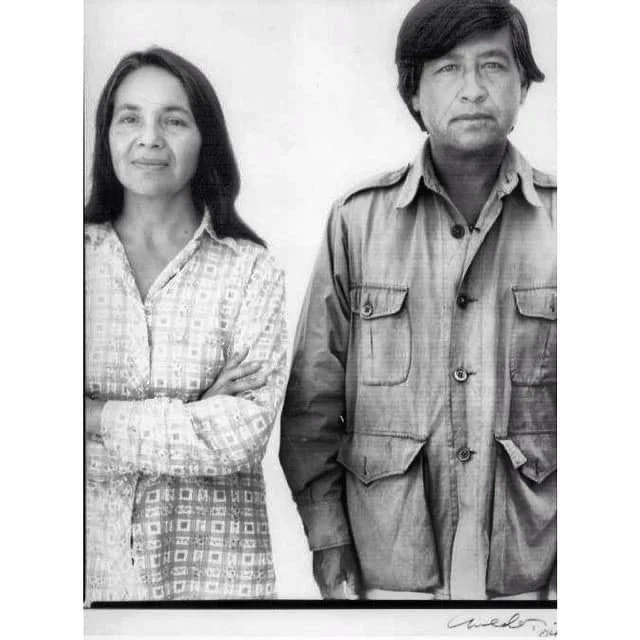
Dolores Huerta and César Chávez
A heavy dullness overtook my heart as I read the New York Times investigation into the sexual assaults of César Chávez and Dolores Huerta’s response. I know far too well, from both lived and professional experience, the false choice Dolores and so many other multi-oppressed people face: pursue justice for our individual trauma OR stay silent (allowing perpetrators to remain at large) in service of other forms of justice and safety, for ourselves and others.
Those of us who do not tell our stories do so out of fear. Fear of what disclosure will do to the movement. Fear of how it will affect our relationships and financial security. Fear that we will be marked as damaged goods. Fear that people won’t believe us. Even worse, fear that they will blame us. Fear that justice is not a plausible outcome. Fear that if justice seems possible, the only sanctioned version of it is to retribute harm to the person who harmed us — further perpetuating cycles of violence in our communities rather than breaking them.
I didn’t tell my parents about my teenage sexual assaults until I graduated from college. I was afraid of how they would respond. When I did finally tell my mother, she called me a liar. She then told my father, who called me a slut, and kicked me out of the house.
I only told my mother after she responded to my expressed desire to start therapy by declaring, “You don’t need therapy. We gave you a perfect life.” That statement says it all. She needed me to be a liar in order to preserve the beliefs that she was the perfect mom and I had a perfect childhood. I believe my father called me a slut simply because his identity as a good father needed me to have wanted this kind of sexual attention rather than believe he had failed to protect me from it.
Systems and cycles of power abuse are what normalize harmful patterns, numb so many of us to them, and allow these patterns to replicate and flourish.
For true justice to be served, conditions must be created, as an absolute priority, that allow survivors to reclaim and rebuild their experience of dignity, power, and agency. The first step in this process is to listen to and validate their stories.
Holding people personally accountable (or better yet, supporting people to hold themselves accountable) for harms they have caused, is also an essential part of justice work.
If we want to break the cycles of systemic injustices and interrupt the rampant patterns of power abuse in our families, workplaces, and communities, then a third key component of this work becomes essential: identifying and addressing root causes, including systemic abuses of power. Systems and cycles of power abuse are what normalize harmful patterns, numb so many of us to them, and allow these patterns to replicate and flourish.
Painfully, conventional retributive justice systems are deeply dissatisfying in all these regards. The application of dichotomous lenses of right vs. wrong and victim vs. offender flattens the dynamics at play, and abdicates those complicit as well as systemic root causes. Solely holding perpetrators accountable for “breaking the law” (the state v. so and so) excludes the victims’ needs for relational accountability, repair, and reclamation of the power to protect themselves. Most importantly, solutions that rely on punishment and/or erasure are deeply inadequate in their ability to break cycles of harm.
My experiences applying transformative justice (TJ), or what Mia Mingus refers to as a process of “creating justice together,” to both personal and professional circumstances of conflict and harm, has not only been deeply satisfying but truly hope-inspiring. I used to lead Victim-Offender Dialogue (VOD) preparedness in prisons and juvenile detention centers. This work allowed me to experience firsthand two foundational TJ principles: hurt people are the ones who hurt people and good people can and do cause harm.
Central to the VOD preparedness work were concrete practices that support incarcerated humans to understand the origin stories of their harmful beliefs and behaviors. We unpacked these histories, not to excuse their behaviors, but to understand how their sense of right and wrong got off track, and to lay the groundwork for repairing it. Root causes were almost always sourced from a complex of neglectful and/or abusive circumstances, often endured at a young age and in the absence of adequate protection or opportunities to heal. Root causes almost always included the excessive abuse and neglect of government agencies that are supposed to serve and protect.
I recall one of the incarcerated men I worked with in San Quentin Prison sharing about the first time he was violent. He was 8 years old. His 5-year-old brother had just been beaten up at school. His mother instructed him to go to school and “beat the shit out of the kid who hurt your brother.” When asked how he responded, tears welled up in this grown man’s eyes, “I didn’t want to beat up anyone. And I told my mother so.” She responded by saying, “You go to school tomorrow and beat the shit out of that kid, or I will beat the shit out of you when you come home.” Left with this false choice, he went to school the next day and did as his mother instructed. The results: his mom was proud of him. His brother looked up to him. The kids at school respected him. And there began his slippery slope towards a violent future.

Unpacking the root causes of harmful beliefs and behaviors serves another critically important function in the process of breaking cycles of harm. It helps people realize: 1) who they are is different from what they have done, 2) the choices they made are not consistent with their values, and 3) they are still worthy of love, care, and a place in community. In short, through transformative justice, we can help people restore their dignity. For those committed to restoring their rightful place in the community, this dignity serves as the taproot from which they find the courage, resilience, and capacity to hold themselves accountable for the harm they have caused and the repair that is required.
I love both my parents. They were/are good, generous, and kind people, who nurtured and protected me in countless ways throughout my childhood. As a parent myself, I have compassion for their unskillful reactions to learning the traumatic news of their daughter being sexually assaulted. Sadly, their reaction is more the norm than the exception. That is the best many parents are equipped to do. That is not a character judgment. It is the unfortunate reality that my liberation requires, and TJ positions, me to accept as true.
On a more hopeful note, these TJ experiences have positioned me to embody some very different values than my parents did in response to learning that my daughter experienced harm that I was responsible for protecting her from. Values that I hope will break at least one pattern of harm within our family.
I am not at liberty to share more about what happened to my daughter, for many of the same reasons other survivors of harm don’t tell their stories. I can tell you the values I am embodying for my daughter are the same foundational values I infuse into every justice strategy I employ:
Assume victims are telling the truth (unless proven otherwise).
Impact matters more than intention.
Hurt people are the ones that hurt people.
Good people can do bad things. Great people hold themselves accountable for the harm they cause.
Working through harm, conflict, and relational tensions in holistic and accountable ways can break cycles of violence and generate radical healing for all impacted and impacting parties.
I center these values in my work with teams navigating systemic abuses of power. With movement and organizational leaders learning to hold themselves accountable. With individuals and institutions preparing for landback and reparation processes. With those harmed as they build their strategy and capacity for pursuing justice. With adults committed to radical parenting. And I would welcome the opportunity to help you center them in your strategy and action plan to break cycles of harm within your community, organization, or movement. Feel free to reach out if you have any questions.