
Accepting Change: A Practice
I recently had a rough morning getting my kiddo to school. Instead of staying focused on essential tasks like combing her hair, eating breakfast, and brushing her teeth, she was playing a boisterous game of marco-polo with the cranberries in her oatmeal. In response, I served her up a breakfast filled with more eruptions of fury than sweet bursts of fruit.
After dropping her off, I sat under a young banyan tree, inviting the warmth of the sun to melt mommy monster back into a human. Once back in my skin, the oh-so-familiar humility that comes with parenting returned, reminding me that a poor night’s sleep was far more to blame for my crankyness than my 6-year-old’s cranberry game.
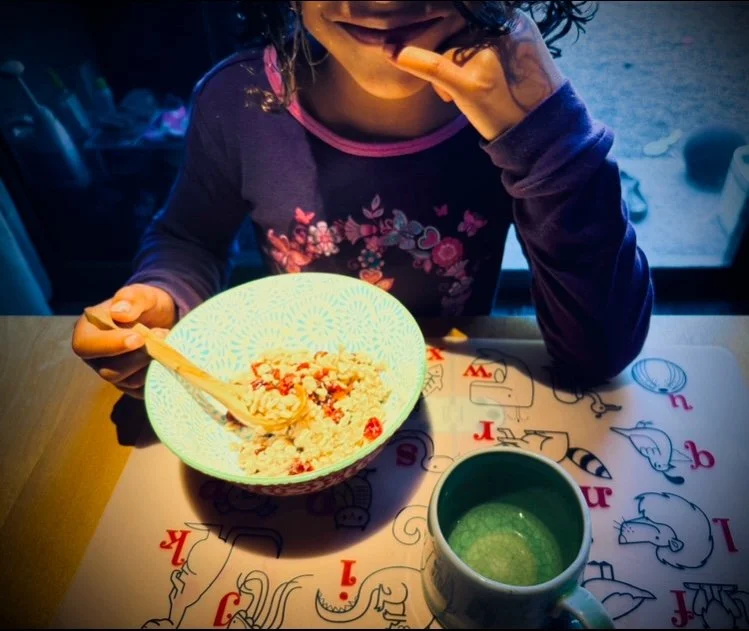
Miakoda’s daughter eating a bowl of oatmeal and cranberries.
I owed her an apology.
I also owed myself an inquiry into the cause of my disrupted sleep.
For better or worse, when I apologized at dinner, my daughter responded, “No worries mom. I know you can get kinda beastly when you don’t get enough sleep. It’s ok, I am used to it. And I still love you.” Ahh, the grace of a six-year-old.
The answer that emerged from the self-inquiry was also simple: I am in the midst of a lot of change.
***
My daughter and I recently uprooted ourselves from our ancestral homeland in the U.S. and moved to Nayarit, MX. We’ve been experiencing the usual challenges that accompany relocating into a new home, social circle, and routine, while also grappling with the nuances and implications of being uninvited migrants on land stolen from the Huicholes people. As I acclimate to a foreign climate and culture, I am also establishing new patterns of relating with our dearest beloveds (now living over 1,000 miles away), as well as launching a new iteration of my work.
In addition to these personal changes, the geopolitical order is rapidly mutating into unrecognizable shapes and forms. My tax dollars (yes, I still pay U.S. taxes) are funding extreme forms of state-sanctioned violence on people and communities, in the U.S. and across the globe, that I relate to as kin.
Sigh. It’s a lot to contend with.
***
As much as I teach about change, change is always teaching me (cue Octavia Butler’s “all that you touch you change, all that you change changes you”). In this moment, it is reminding me of the essential role that acceptance has to play in the constant, necessary, and never-ending spirals of change. This kind of acceptance is a practice, far more than a state of being. And it is only when this practice is well-developed that we can begin to expect ourselves to reliably navigate change with any semblance of ease, agency, or grace.
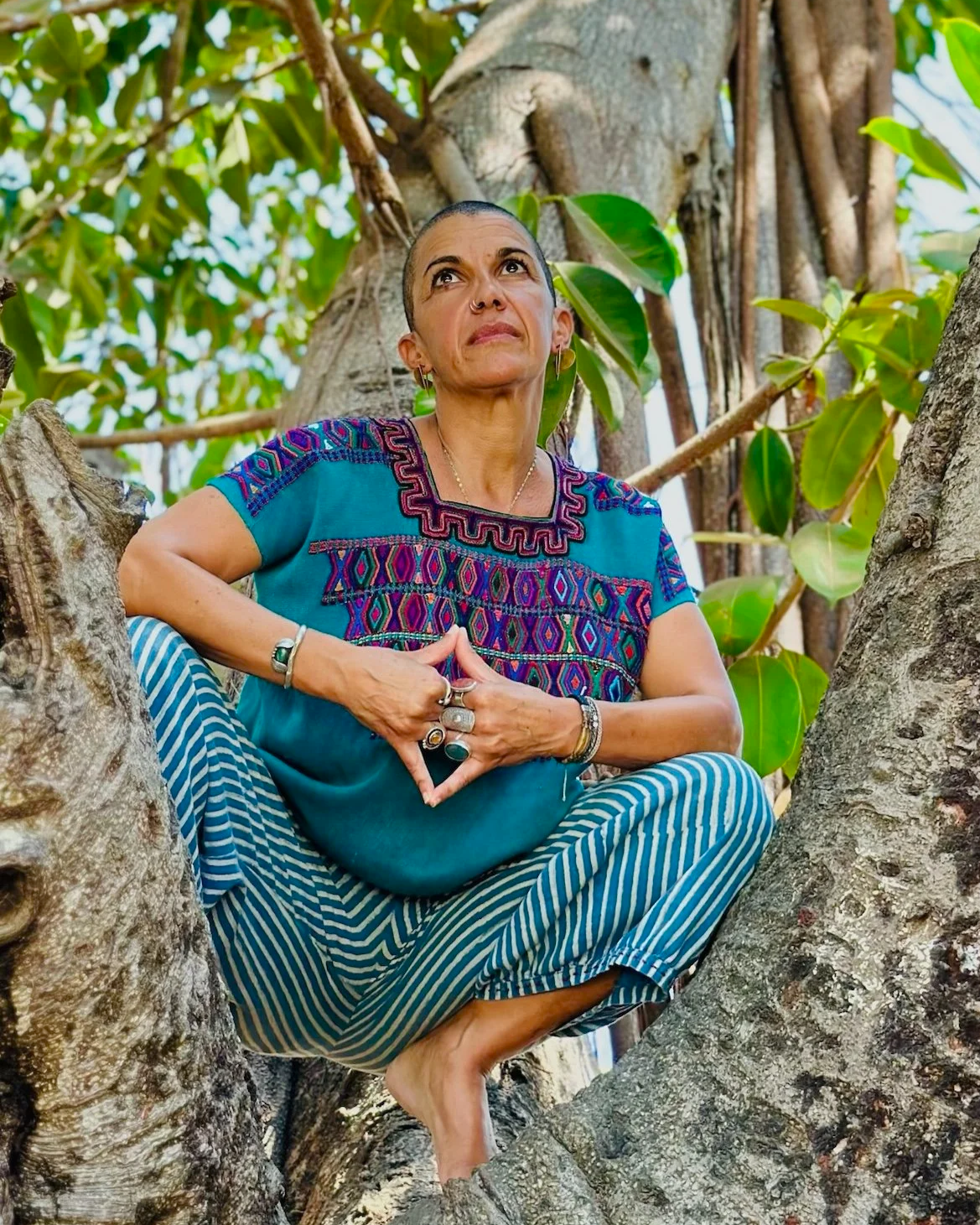
Miakoda perched in a banyan tree in Mexico.
Memoire of Change is one of the activities I use to support myself and my practice partners (a term I use instead of“clients”) in cultivating a strong practice of acceptance. Participants are first invited to do a deep introspective dive into their relationship and conditioning related to change. They then use the insights derived to re-author their relationship to change from a Get Free perspective. This activity is the latest in the series: Memoire of Privilege, Memoire of Power, and Memoire of Wealth — all designed to draw upon the power of self-inquiry and storytelling to re-author(ize) our relationships to uncomfortable forces affecting our lives.
Some of the Memoire of Change questions we use to guide the self-inquiry include:
Who are the people in your life that accept and move through change with grace? Who are the people in your life that most resist change? What are the behaviors and beliefs that differentiate them? How does their relationship to change impact their life and their relationships?
What are the three most significant moments / periods of change you have experienced in your life? What led to these changes? In what ways were you an agent of these changes, and in what ways were you a bystander?
How do you relate to change? What emotions, sensations, and stories surface when you are in the midst of a transition? What behaviors and beliefs do you embody in these moments? Where did you learn them? How does your response to change impact your life and relationships?
What daily practices do you have, or could put in place, to support your acceptance of change?
If this type of inquiry feels inspiring, makes you nervous, or a little of both, you are probably ripe for this kind of exploration. If you want support in making the process exciting, revealing, and transformational, complete this interest form to schedule your FREE consultation call.