
Embodying “Otherness”: A Portal to Dignity and Collective Freedom
From an early age, I experienced myself as different.
Race was the first difference I became conscious of. My cafe au lait, afroed self didn’t share much resemblance to my blonde-haired, blue-eyed mom. This was made repeatedly apparent by the puzzled looks flashed our way when we expressed affection in public.
I didn’t even look like my taupe-skinned, wavy-haired brother. The front desk attendants of more than one tennis club made this emphatically clear when they declared that my brother was welcome to play there, but I was not.
I definitely didn’t look like the white kids at my school. I cringe when I look at photos of myself in the 6th grade, wearing frosty pink lipstick and light blue eyeliner, as an effort to appear like the other girls (I was the only black kid in my class).
I also didn’t relate to how my mother, brother, or many of my classmates interacted with the world. Money always seemed extremely important to them. As if money was the ultimate measure of their worth.
Somehow, I never subscribed to this value system. I’ve always believed my worth to be measured by the kindness, consideration, and generosity I express towards others. I still experience a warm spaciousness in my chest when I leave people and places a little happier, cared for, respected, and connected, especially those of us whose dignity and well-being are systemically desecrated within mainstream society.
I later realized that “somehow” was my dad.
***
My father was born in Brooklyn NY in 1939, descended from ancestors who were among the very first to be stolen from Africa and traded as chattel in the U.S. This long history within U.S. slavery led to countless generations of slave rape, and a melanin count repeatedly doused with whiteness, resulting in the many privileges that light skinnedness affords.
Following in the footsteps of three generations of college-educated kin, my father attended Cornell University as one of only four black students in his class. He went on to attend medical school and become one of the first black orthopedic surgeons in the world.
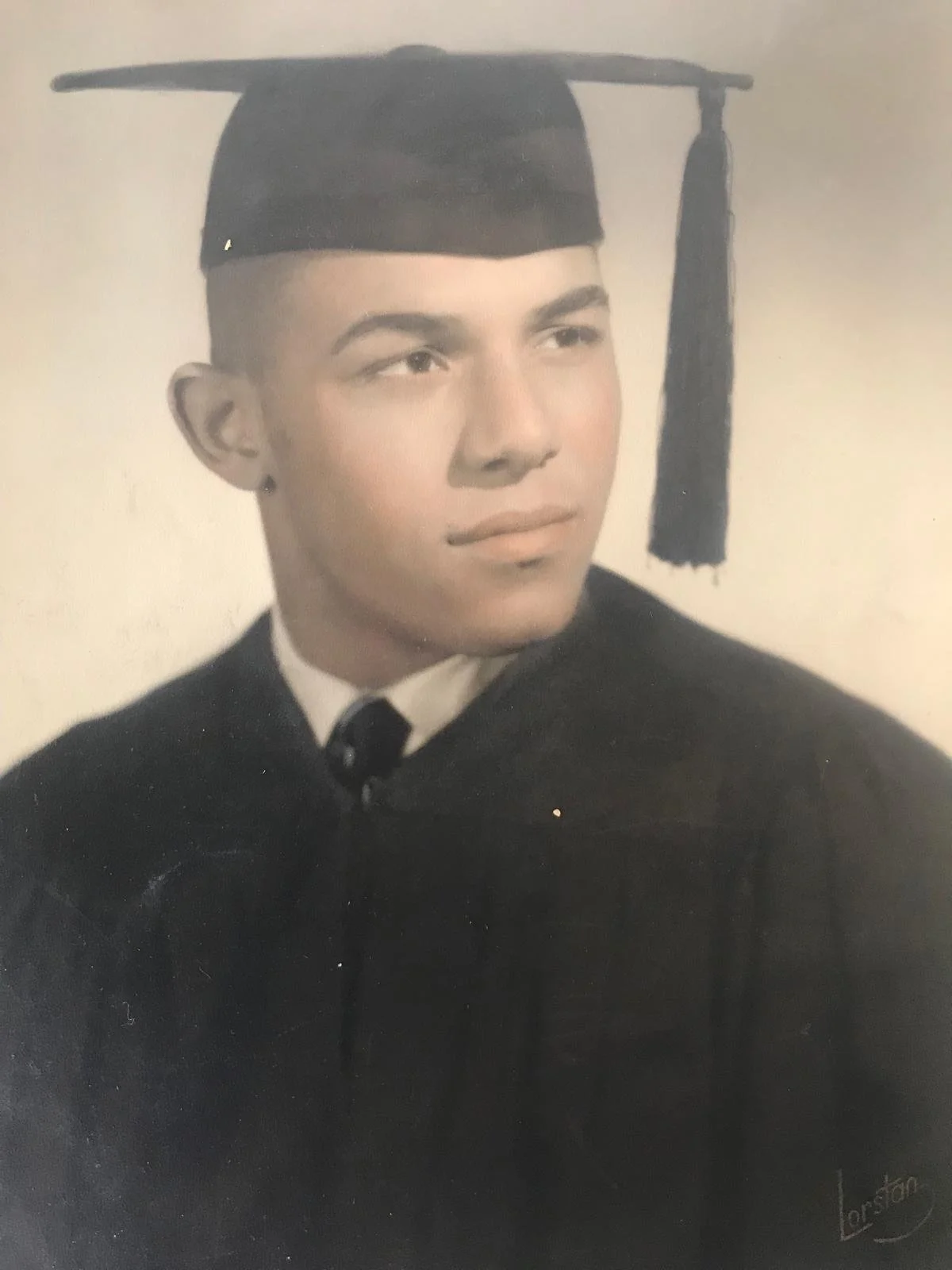
Photo of Miakoda’s father at Cornell University graduation
His privileged doctor status allowed him to avoid combat during Vietnam and instead operate on soldiers evacuated from the front lines. This afforded him exceptional orthopedic training, and positioned him to be offered positions at several elite hospitals.
But working at an elite hospital was not my father’s calling. Instead, he chose to return to his hometown of Bedford Stuyvesant and be of service to his people.
My father will never admit this, but he is a bit of a legend. I have heard countless testimonies, from patients and colleagues, about the quality of care, to both body and soul, that he provided to those around him. When these stories are repeated in front of my dad, he giggles awkwardly while waving the acknowledgements away and muttering “I was just doing my job.”
I descend from a rich legacy of otherness rooted in multiple generations of being the first or only one of a few. Through both example and cellular imprint, my ancestors have taught me the art of embodying one’s otherness with dignity and as an authentication of our identity and values.
***
As I got older, I began conspiring with folks who were breaking with conformity and living life on their own terms. Building community with such mavericks, and realizing there was a “we” to be found in our otherness, ignited a level of aliveness, excitement, and dignity I have been addicted to ever since.
This feeling aroused my queerness as much as, if not more than, my attraction to female and gender-non-conforming bodies.
It also compelled my lifelong commitment to social justice and disrupting the status quo. Sadly, embracing my identity as disabled was more complicated.
I spent much of my life subscribing to the conditioned beliefs: There is something “wrong” with people with disabilities. There is something “wrong” with me for experiencing chronic pain. I am doing something “wrong” if I cannot liberate myself from that pain or its impacts on my mind, body and spirit. Don’t let anyone know you are struggling.
At a particularly low point in my life, after decades of attempting to sustainably live a “normal” life while enduring debilitating migraines and repeated bouts of depression, and upon realizing allopathic medicine couldn’t absolve me from my ailments and their associated shame, these beliefs slowly stopped ringing true.
As I started untangling myself from their limitations, I also stopped trying to escape the pain. Instead, I began engaging practices of accepting, being intimate with, and becoming curious about the deeper causes and opportunities in my suffering.
In short, I started to heal.
***
Throughout my life I have traversed through many healing portals, birthed from the depths of despair. Each time I surrender to the alchemy of these transitions, something magical happens. The chatter of doubts, fears, and inadequacies grow quieter. The oppression imposed by dominant culture loosens its grip. My knowing and loving of my imperfectly perfect self deepens.
I am traversing through one of those portals right now, in response to a harrowing event my daughter and I experienced in 2025. Something that could categorically be described as a parent’s worst nightmare.
As I continue to process this event and the broad complex of emotions that accompany it, which I will likely share more about in the future, I find increasing levels of ease and inspiration each time I ask for understanding and alignment with the divine purpose of this event in our lives. The response that emerges from within is consistent, simple, and clear:
“This is your work in the world”
— specifically the work of amplifying love, accountability, and community through the sharing of my stories.
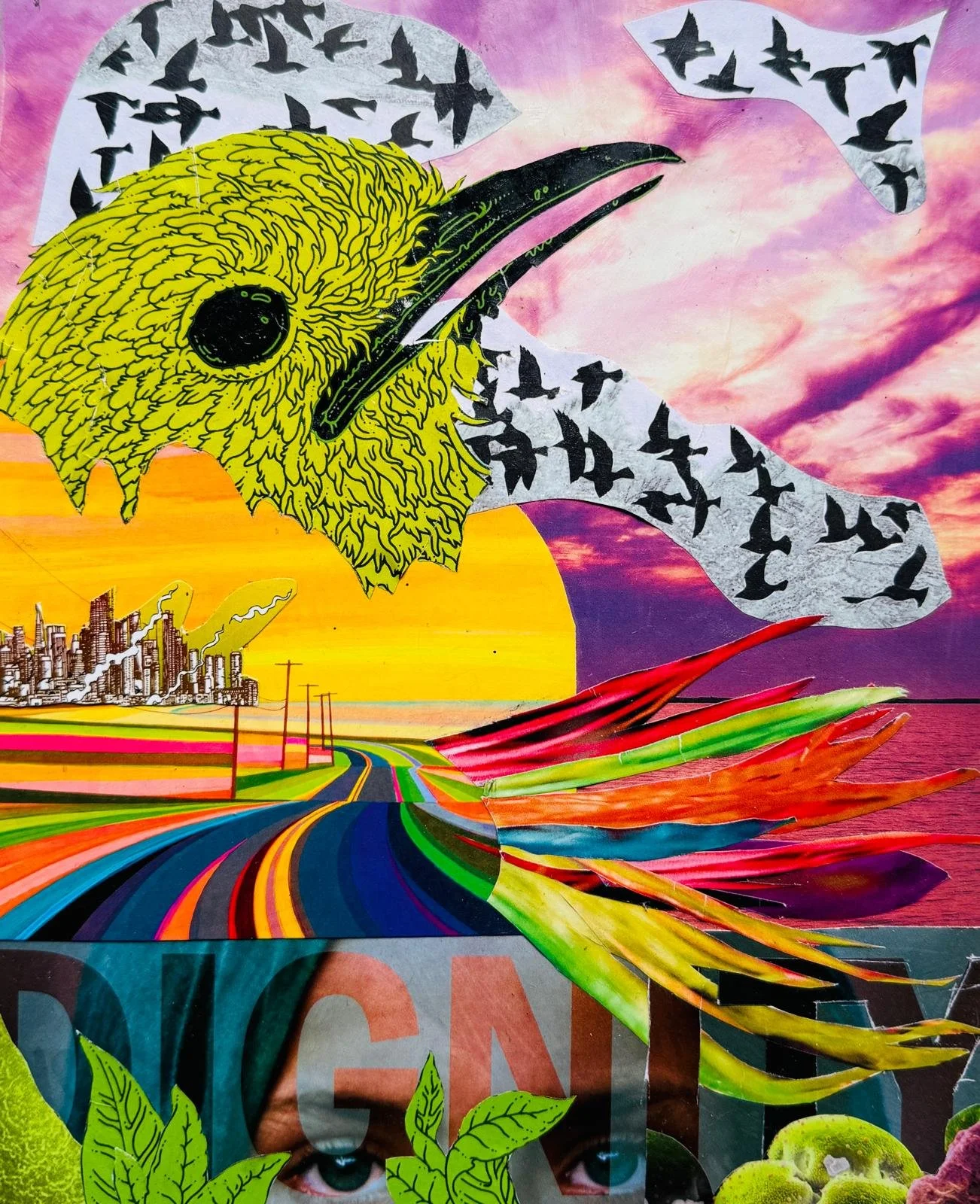
“Dignity” collage by the author, J. Miakoda Taylor, 2025
ALL of us could embody our otherness as an authentication of our most unique selves — if we simply resist the pressure to conform. And in doing so, each of us would become part of the “we” building collective power outside the confines of business as usual.
Resisting the pressure to conform may feel more straightforward for working class, disabled, Indigenous, Black, brown, trans, and queer folks, since dominant culture already dictates that we don’t fit into its definitions of “normal,” “valued,” and “welcomed.”
I get how resisting conformity or dismantling the status quo may feel counterintuitive to others of us who are afforded superiority, privilege, and safety within it.
And my questions to all of us, no matter where we live on this spectrum, are:
How have mainstream expectations rendered us dis-abled to live according to the realities of our individual capacities?
Are we consistently proud of how we impact the places and people we encounter? Especially our impact on those of us whose dignity and well-being are systemically desecrated within mainstream society?
What are our individual practices of surrendering to the divine purpose of our greatest fear or pain?
If we were to die tomorrow, would we rest in peace knowing we lived an authentic and liberated life?
In what ways might embodying our queerness set us free?
If any of these questions inspire a deeper inventory of your current existence, I encourage you to carve out a quiet space and time to journal your responses. Feel free to share your insights in the comments.
If you feel called to access rigorous and compassionate support as you discover new layers of your perfect imperfection, please complete this interest form to schedule your FREE consultation call with me. I would be honored to weave a shared and liberated “we” with you.